Welcome to iCON Education
AI Tool of Learning...
Select a concept from the sidebar to start learning.
NEET
1 1. Basicity and Electronic Effects
The basicity of amines is primarily determined by the availability of the lone pair of electrons on the nitrogen atom for donation to an electron-deficient species (like a proton). According to the sources, this property is governed by several electronic and environmental factors.
1. The $\mathrm{pK_b}$ Scale and Basicity
Basicity is quantitatively expressed using the $\mathrm{pK_b}$ value. There is an inverse relationship between the two:
- Lower $\mathrm{pK_b}$ value = Higher basicity.
- For example, aliphatic amines typically have lower $\mathrm{pK_b}$ values than aromatic amines, making them stronger bases.
2. Aliphatic vs. Aromatic Amines
A major conceptual division in basicity exists between aliphatic and aromatic amines:
- Aliphatic Amines: These are stronger bases than ammonia and much stronger than aromatic amines. Their lone pair is localized on the nitrogen atom and further pushed toward availability by the $+I$ effect of alkyl groups.
- Aromatic Amines (Arylamines): These are generally less basic than alkylamines. This is because the lone pair of electrons on the nitrogen atom is delocalised through interaction with the $\pi$-electron system of the aromatic ring. This resonance makes the electrons less available for donation.
3. Electronic Effects
The electronic environment surrounding the nitrogen atom significantly alters basic strength:
- Inductive Effect ($+I$): Alkyl groups (like methyl or ethyl) push electron density toward the nitrogen, increasing its ability to donate the lone pair.
- Resonance Effect (Delocalization): If the lone pair participates in resonance—either with an aromatic ring or a carbonyl group (as in amides) — the basicity drops significantly. For instance, the basic strength decreases in the order: cyclohexylamine > aniline > benzamide.
- Localized vs. Delocalized Lone Pairs: A compound like benzylamine is more basic than aniline because the nitrogen is not directly attached to the ring; thus, the lone pair is not delocalised and remains available for donation.
4. Substituent Effects on Aromatic Rings
The presence of other groups on an aromatic ring further modifies basicity:
- Electron-Withdrawing Groups (EWG): Groups such as $-\mathrm{NO_2, -CN, -SO_3H, -COOH,}$ and $-\mathrm{Cl}$ decrease basicity by pulling electron density away from the amino group. For example, p-nitroaniline is less basic than aniline.
- Electron-Donating Groups (EDG): Groups like methyl ($-\mathrm{CH_3}$) increase electron density on the nitrogen, increasing basicity. Consequently, p-toluidine is more basic than aniline.
5. Basicity in Aqueous Solution
In aqueous (water-based) solutions, basicity does not follow a simple inductive effect trend due to competing factors. For methyl-substituted amines, the order of basic strength is: $\mathrm{(CH_3)_2NH > CH_3NH_2 > (CH_3)_3N}$ (Secondary > Primary > Tertiary).
This specific order is determined by three factors:
- Inductive Effect ($+I$): Favors tertiary amines.
- Solvation Effect (Hydrogen Bonding): Favors primary amines because they can form more hydrogen bonds with water, stabilizing the resulting cation.
- Steric Factor: Bulky groups can hinder the approach of water molecules or protons. For small groups like methyl, the stability provided by hydrogen bonding predominates over the inductive effect when comparing primary and tertiary amines.
6. Effect of Strong Acidic Medium
Under strongly acidic conditions, aniline is converted into the anilinium ion ($-\mathrm{NH_3^+}$). Because the positive charge on the nitrogen in the anilinium ion makes it a meta-directing group, nitration in these conditions results in an unexpected amount of m-nitroaniline.
Loading Concept 2...
Loading Concept 3...
Loading Concept 4...
Loading Concept 5...
Loading Concept 6...
PYQ for: 1. Basicity and Electronic Effects
Question 1:
Question: Given below are two statements:
Statement-I: Oxidation of p-nitrotoluene with acidic $\mathrm{KMnO}_4$ gives an acid that is stronger than benzoic acid.
Statement-II: Reduction of p-nitrotoluene with $\mathrm{Sn}/\mathrm{HCl}$ followed by neutralization gives an amine that is more basic than aniline.
In light of the above statements, choose the most appropriate answer from the options given below.
Options:
A) Statement-I is incorrect but Statement-II is correct
B) Both Statement-I and Statement-II are correct
C) Both Statement-I and Statement-II are incorrect
D) Statement-I is correct but Statement-II is incorrect
Correct Answer: B
Year: RE-NEET 2026
Solution:  Oxidation of p-nitrotoluene with acidic $\mathrm{KMnO}_4$ converts it into p-nitrobenzoic acid. Because of the -I and -M effects of the nitro group, p-nitrobenzoic acid is a stronger acid than benzoic acid. Reduction of p-nitrotoluene with $\mathrm{Sn}/\mathrm{HCl}$ followed by neutralization reduces the $-\mathrm{NO}_2$ group to an amino group ($-\mathrm{NH}_2$), forming p-toluidine (p-methylaniline). This is more basic than aniline due to the +I effect and hyperconjugation of the methyl group.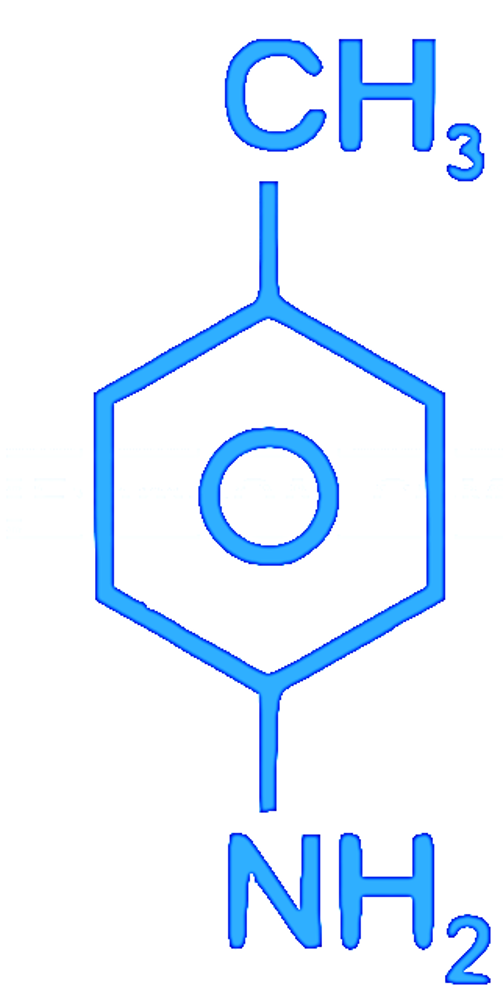
Step Solution:
1. Identify Oxidation Product: p-nitrotoluene + acidic $\mathrm{KMnO}_4$ $\rightarrow$ p-nitrobenzoic acid.
2. Evaluate Acidity: The $-\mathrm{NO}_2$ group is an Electron Withdrawing Group (EWG) exhibiting -I and -M effects, which stabilize the carboxylate ion more than in benzoic acid, making it a stronger acid.
3. Identify Reduction Product: p-nitrotoluene + $\mathrm{Sn}/\mathrm{HCl}$ $\rightarrow$ p-toluidine (after neutralization).
4. Evaluate Basicity: The $-\mathrm{CH}_3$ group is an Electron Donating Group (EDG) exhibiting +I and hyperconjugation effects, which increase electron density on the nitrogen lone pair compared to aniline, making it more basic.
5. Conclusion: Both statements regarding increased acidity and increased basicity are true.
Difficulty level: Hard
Concept Name: Electronic Effects on Acidity and Basicity (-I, -M, +I, Hyperconjugation)
Short cut solution: EWG (like $-\mathrm{NO}_2$) increases acidity; EDG (like $-\mathrm{CH}_3$) increases basicity of aromatic systems.
Question 2
Question: The correct order of decreasing basic strength of the given amines is: Answer (1)Sol. Lower is the value of $pK_b$ , higher is the basicity Also aliphatic amines are stronger bases than aromatic amines. $pK_b$ : Benzenamine > N-Methylaniline > Ethanamine > N Ethylethanamine Basic strength : N-Ethylethanamine > Ethanamine > N-Methylaniline > Benzenamine
Options:
A. N-ethylethanamine > ethanamine > N-methylaniline > benzenamine
B. benzenamine > ethanamine > N-methylaniline > N-ethylethanamine
C. N-methylaniline > benzenamine > ethanamine > N-ethylethanamine
D. N-ethylethanamine > ethanamine > benzenamine > N-methylaniline
Correct Answer: A
Year: NEET 2025
Solution: Lower is the value of $\mathrm{pK_b}$, higher is the basicity. Also, aliphatic amines are stronger bases than aromatic amines. $\mathrm{pK_b}$ values: Benzenamine > N-Methylaniline > Ethanamine > N-Ethylethanamine. Basic strength: N-Ethylethanamine > Ethanamine > N-Methylaniline > Benzenamine.
Step Solution:
1. Identify types: Categorize as aliphatic ($2^\circ$ N-ethylethanamine, $1^\circ$ ethanamine) and aromatic ($2^\circ$ N-methylaniline, $1^\circ$ benzenamine).
2. Primary Rule: Aliphatic amines are more basic than aromatic amines because their lone pairs are not delocalized into a benzene ring.
3. Compare Aliphatic: N-ethylethanamine ($2^\circ$) is more basic than ethanamine ($1^\circ$) due to the inductive $+I$ effect of two ethyl groups.
4. Compare Aromatic: N-methylaniline ($2^\circ$) is more basic than benzenamine ($1^\circ$) because the methyl group provides a $+I$ effect to the nitrogen.
5. Final Order: $2^\circ$ Aliphatic > $1^\circ$ Aliphatic > $2^\circ$ Aromatic > $1^\circ$ Aromatic.
Difficulty Level: Medium
Concept Name: $\mathrm{pK_b}$ and Inductive Effects
Short cut solution: Aliphatic is always stronger than aromatic; for simple alkyl chains, $2^\circ > 1^\circ$.
Question 12
Question: The correct order of the basic strength of methyl substituted amines in aqueous solution is
Options:
A. $\mathrm{CH_3NH_2 > (CH_3)_2NH > (CH_3)_3N}$
B. $\mathrm{(CH_3)_2NH > CH_3NH_2 > (CH_3)_3N}$
C. $\mathrm{(CH_3)_3N > CH_3NH_2 > (CH_3)_2NH}$
D. $\mathrm{(CH_3)_3N > (CH_3)_2NH > CH_3NH_2}$
Correct Answer: B
Year: NEET 2019
Solution: Basicity in aqueous solution depends on the $+I$ effect, hydrogen bonding (solvation), and steric factors. For the small $\mathrm{CH_3}$ group, $2^\circ$ amines are the strongest as they balance these factors. Stability due to H-bonding predominates over the $+I$ effect in $1^\circ$ vs $3^\circ$ amines.
Step Solution:
1. Aqueous Factor: Recognize that in water, solvation (H-bonding) is as important as the inductive effect.
2. $2^\circ$ Supremacy: In methyl amines, $\mathrm{(CH_3)_2NH}$ is always the strongest base.
3. Solvation vs Sterics: $\mathrm{(CH_3)_3N}$ ($3^\circ$) is the weakest because three methyl groups create steric hindrance that prevents water from stabilizing the cation via H-bonding.
4. Comparison: $\mathrm{CH_3NH_2}$ ($1^\circ$) is stronger than $3^\circ$ due to better solvation.
5. Result: $2^\circ > 1^\circ > 3^\circ$ ($\mathrm{(CH_3)_2NH > CH_3NH_2 > (CH_3)_3N}$).
Difficulty Level: Medium
Concept Name: Solvation and Steric Hindrance
Short cut solution: Remember the code 213 for methyl amines in water ($2^\circ > 1^\circ > 3^\circ$).
Question 15
Question: The correct increasing order of basic strength for the following compounds is 
Options:
A. III < I < II
B. III < II < I
C. II < I < III
D. II < III < I
Correct Answer: C
Year: NEET 2017
Solution: Increasing order: p-nitroaniline < aniline < p-toluidine.
Step Solution:
1. Analyze Substituents: $-\mathrm{CH_3}$ (in Toluidine) is an electron-donating group (EDG); $-\mathrm{NO_2}$ (in Nitroaniline) is an electron-withdrawing group (EWG).
2. EDG Effect: The $+I$ and hyperconjugation effects of the methyl group increase electron density on Nitrogen, making III the most basic.
3. EWG Effect: The strong $-R$ and $-I$ effects of the nitro group pull electrons away from Nitrogen, making II the least basic.
4. Reference: Aniline (I) has no substitution and falls in the middle.
5. Final Sequence: II (Nitro) < I (Aniline) < III (Toluidine).
Difficulty Level: Easy
Concept Name: Substituent Effects (EDG/EWG)
Short cut solution: EDG (Toluidine) increases basicity; EWG (Nitro) decreases it.
Question 19
Question: The correct statement regarding the basicity of arylamines is
Options:
A. arylamines are more basic than alkylamines because of aryl group
B. arylamines are generally more basic than alkylamines, because the nitrogen atom in arylamines is sp - hybridised
C. arylamines are generally less basic than alkylamines because the nitrogen lone-pair electrons are delocalised by interaction with the aromatic ring $\pi$-electron system
D. arylamines are generally more basic than alkylamines because the nitrogen lone-pair electrons are not delocalised by interaction with the aromatic ring $\pi$ -electron system.
Correct Answer: C
Year: NEET-I 2016
Solution: In arylamines, the lone pair of electrons on the nitrogen atom is delocalised over the benzene ring, making it unavailable for donation. Thus, arylamines are less basic than alkylamines.
Step Solution:
1. Define Arylamine: An amine where Nitrogen is directly attached to an aromatic ring.
2. Mechanism: The lone pair on Nitrogen participates in resonance with the $\pi$ electrons of the ring.
3. Availability: Because of this delocalization, the electrons are less likely to be donated to a proton ($H^+$).
4. Contrast: In alkylamines, the $+I$ effect of alkyl groups actually pushes more electron density toward the Nitrogen.
5. Conclusion: Alkylamines > Arylamines in basicity.
Difficulty Level: Easy
Concept Name: Resonance Effect / Delocalization
Short cut solution: Resonance = less available electrons = lower basicity.
Question 31
Question: Which of the following compounds is most basic?
Options:
A. 
B. 
C. 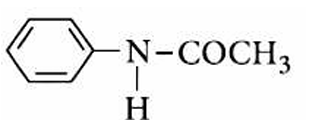
D. 
Correct Answer: B
Year: 2011 Mains
Solution: In benzylamine, the electron pair present on the nitrogen is not delocalised with the benzene ring.
Step Solution:
1. Check Attachment: In benzylamine ($C_6H_5CH_2NH_2$), Nitrogen is attached to an $sp^3$ hybridized carbon, not the ring directly.
2. Analyze Resonance: The $-\mathrm{CH_2}-$ group acts as a spacer, preventing the lone pair from entering the benzene ring's $\pi$ system.
3. Compare: In aniline and its derivatives, the lone pair is directly on the ring and is delocalized.
4. Basicity: A localized lone pair is more available for donation than a delocalized one.
5. Result: Benzylamine is significantly more basic than aniline or nitroaniline.
Difficulty Level: Easy
Concept Name: Localization of Lone Pair
Short cut solution: Benzylamine is an aliphatic amine; it doesn't "know" the ring is there for resonance purposes.
Question 37
Question: Which of the following is more basic than aniline?
Options:
A. Benzylamine
B. Diphenylamine
C. Triphenylamine
D. p-Nitroaniline
Correct Answer: A
Year: 2006
Solution: Electron withdrawing groups decrease basicity. Lone pair electrons are more delocalised in diphenylamine and triphenylamine. In benzylamine, the electron pair is not delocalised, hence it is more basic than aniline.
Step Solution:
1. Reference: Aniline has one ring delocalizing its lone pair.
2. Multi-ring: Diphenylamine (2 rings) and Triphenylamine (3 rings) have even more delocalization, making them less basic than aniline.
3. Nitro effect: $-\mathrm{NO_2}$ is an EWG that further drains electron density.
4. Local Nitrogen: In benzylamine, the lone pair is localized on the nitrogen atom.
5. Conclusion: Localized electrons (Benzylamine) > Delocalized electrons (Aniline).
Difficulty Level: Easy
Concept Name: Electronic Effects on Basicity
Short cut solution: Localized lone pair always beats delocalized lone pair in basicity.
Question 51
Question: Which one of the following order is wrong, with respect to the property indicated?
Options:
A. Benzoic acid > phenol > cyclohexanol (acid strength)
B. Aniline > cyclohexylamine > benzamide (basic strength)
C. Formic acid > acetic acid > propanoic acid (acid strength)
D. Fluoroacetic acid > chloroacetic acid > bromoacetic acid (acid strength)
Correct Answer: B
Year: 1994
Solution: Basic strength decreases as: cyclohexylamine > aniline > benzamide. Lesser basicity in aniline and benzamide is due to participation of the lone pair of electrons in resonance.
Step Solution:
1. Verify Option B: It lists Aniline > Cyclohexylamine.
2. Compare Types: Cyclohexylamine is aliphatic (localized lone pair + ring $+I$ effect). Aniline is aromatic (delocalized lone pair).
3. Evaluate Benzamide: It is an amide where the lone pair is in resonance with a carbonyl oxygen, making it the weakest.
4. Correct Order: Cyclohexylamine (strongest) > Aniline > Benzamide (weakest).
5. Check Others: A, C, and D are all correct based on resonance and inductive effects. Thus, B is the wrong order.
Difficulty Level: Medium
Concept Name: Comparative Acid-Base Strength
Short cut solution: Aliphatic amines are always stronger than aromatic amines; Option B says the opposite.
Loading PYQ...
Loading PYQ...
Loading PYQ...
Loading PYQ...
Loading PYQ...
Quiz for: 1. Basicity and Electronic Effects
Ready to test your knowledge?
This quiz contains practice questions for 1. Basicity and Electronic Effects.